Post 3: The history of ratite science: Charles Darwin
To understand the current consensus on ratite evolution, we need to trace back the scientific progress that was made during the last 150 years. And what better place than to start with Charles Darwin, whose views on evolution have commanded the respect of the scientific community for more than a century.
Darwin published his work ‘On the origin of species’ in 1859, in which he defends his theory of evolution based on arguments from various angles. Simultaneously with Alfred Wallace, Darwin discovered that the dazzling biodiversity on our planet is the product of natural variation in combination with millions of years of selection. Darwin wrote about the evolutionary path of many interesting organisms; species on islands that show similarities with species on the mainland, species that seem more primitive than others, adaptations to all kinds of survival strategies, natural and artificial selection and much more. He took an interest in many animals and plants, and of course the running birds were not left out. In the first edition of his book, Darwin penned down his view on the evolutionary path of the ratites.
It is not hard to imagine how he came to his conclusions. Some most obvious traits of the ratites are the fact that they possess wings and feathers. They are thus closely related to the birds that fly through our skies, there is no doubt about it. Further, it would be difficult to imagine that feathers could have evolved before flight. The logical conclusion is thus that the ostrich and its relatives evolved from a flying bird, and somehow lost flight and evolved to a giant size. Darwin proposed that the closest relative of the ratites might have been the bustards. Take a look at figure 1 and you will know why he made that connection: the bustards are the heaviest flying birds and at first glance have quite a bit of ostrich attitude, if you ask me.
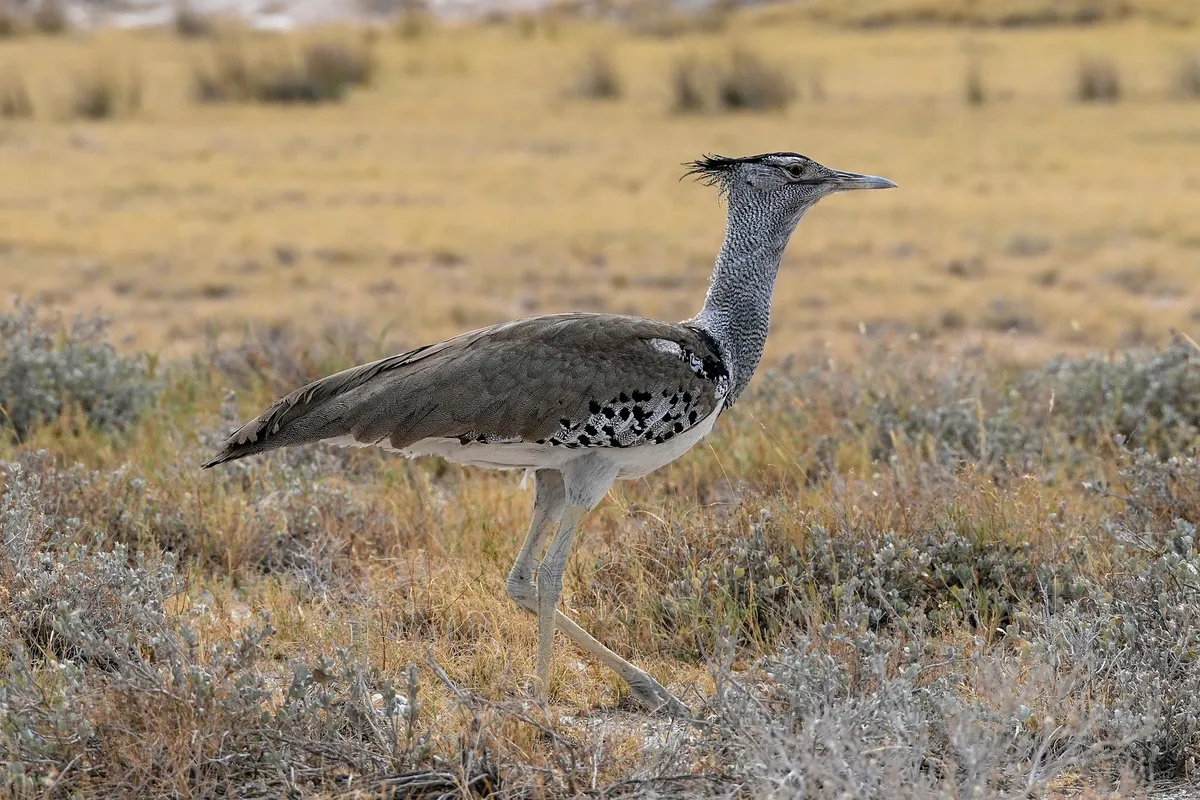
Figure 1. A species of bustard, in 1859 believed by Darwin to be close relatives of the ratites. Picture by Makabera from Pixabay.
Darwin revealed more of his opinion on the evolution of the ratites. He called the rhea ‘the American ostrich’, following Carolus Linnaeus; the African ostrich had been named Struthio camelus, while Linnaeus named the highly similar rhea Struthio americanus. Darwin implied that the similarities between the rhea and the ostrich are similarities by common descent, not by convergent evolution. This was quite controversial, because these animals are of course an ocean apart. But he formulated a similar hypothesis for many more animals and plants that are separated by the Atlantic Ocean between Africa and South-America. The same goes for certain animal families in Australia, New Zealand and South America. Somehow, many flightless animals ended up separated by wide oceans and Darwin suggested that geological evidence would one day be found what happened. He even suggested that Antarctica might have been much warmer in the past, and served as the center of dispersal, also for the running birds. It is not difficult to understand this hypothesis: the ostrich, emu and rhea might live separated by large oceans, but their similarity in physique, skeleton and behaviour is unparalleled (figure 2).
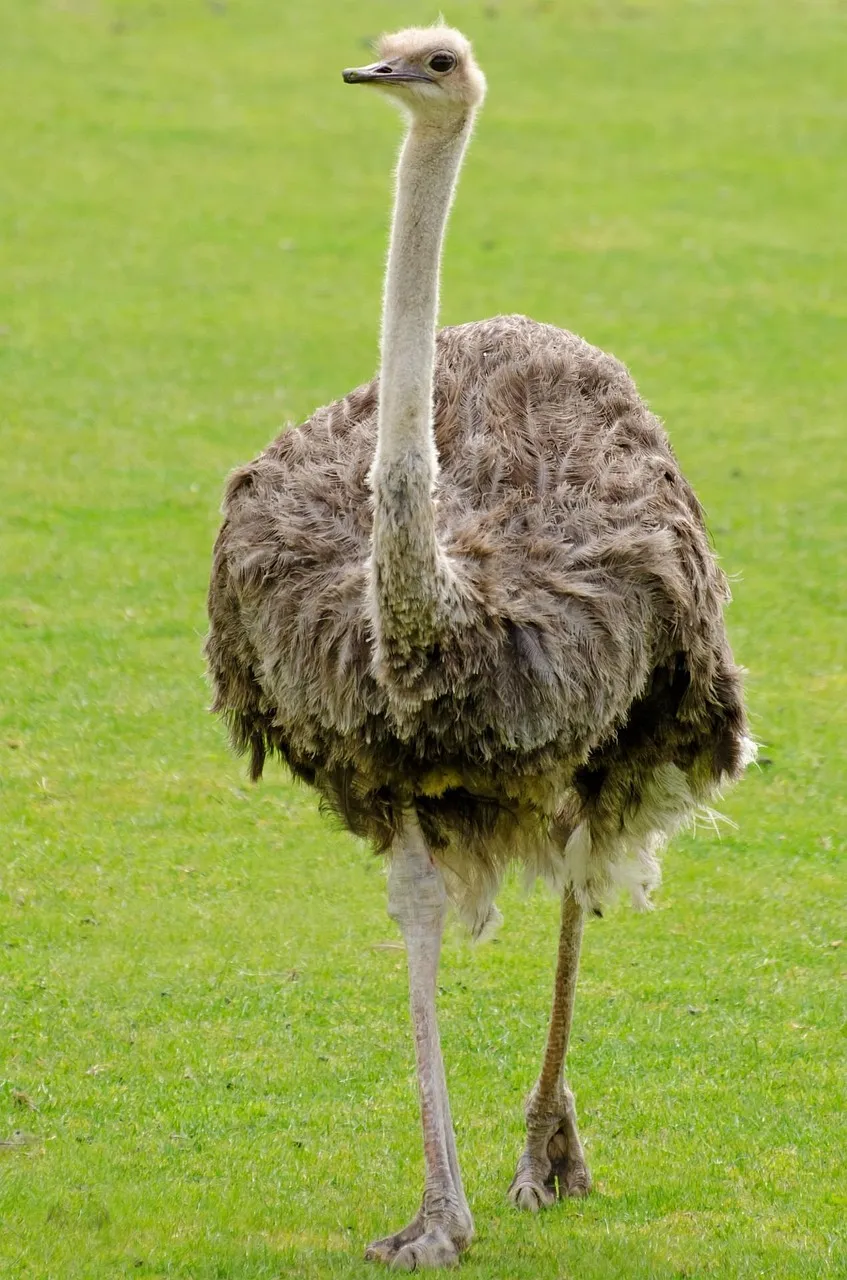
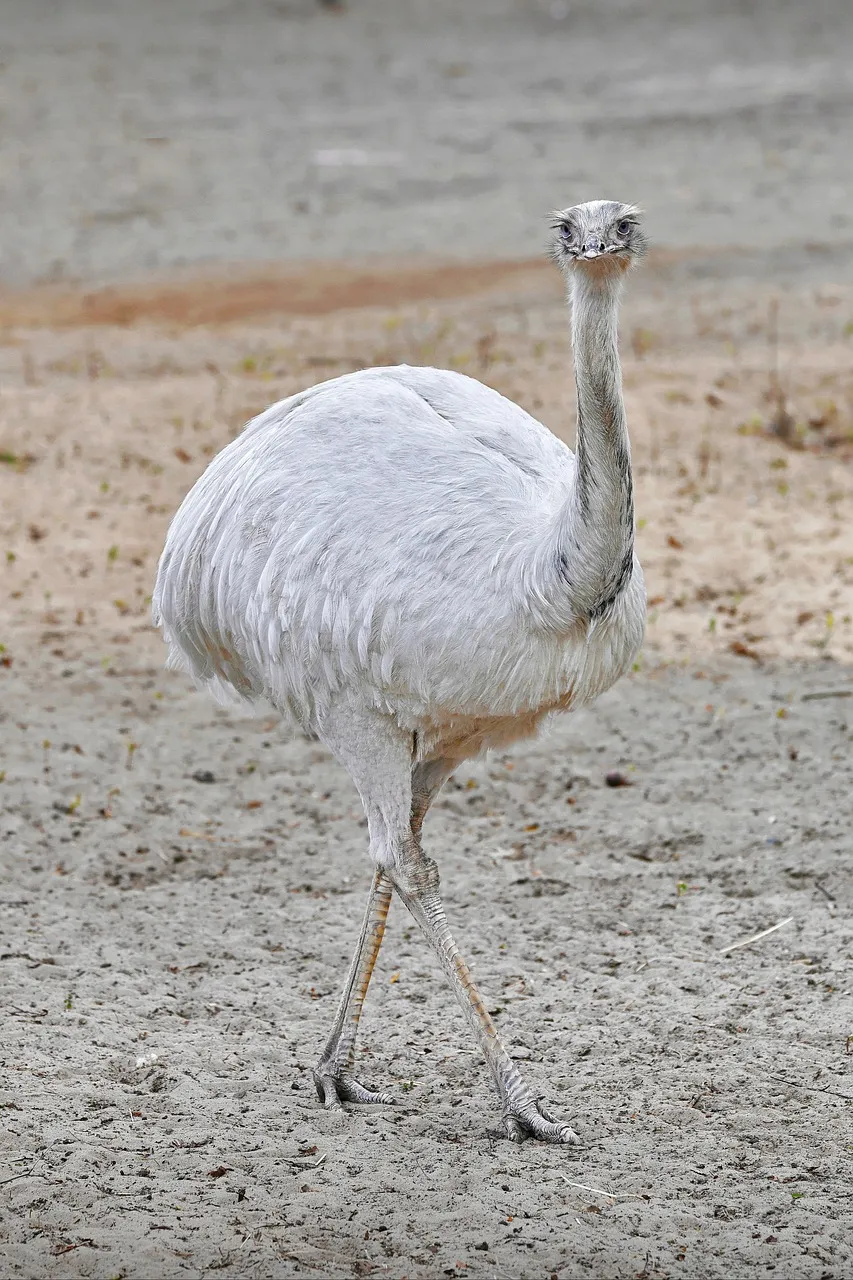
Figure 2. The african ostrich (left) and 'american ostrich' or rhea (right), thought by Darwin to have inherited their similarity from their common ancestor. Ostrich image from PublicDomainPictures (pixabay) and rhea image from Sharkolot (pixabay).
To summarize Darwin's view from 1859: Darwin suggested that the tall feathered running birds evolved at some point from a flying bird, not unlike the bustard. This flying ancestor then evolved into a giant running bird, and this ancestor somehow (not by flight) ended up isolated on different continents and islands, and evolved into the forms we are familiar with. That would be Darwin’s opinion at the time he wrote the first edition. However in a later edition, his view on running birds had already changed. His good friend Thomas Huxley formulated a hypothesis on the evolution of birds that sparked even more controversy. More about that in the next post!