Post 2: Meet the Palaeognathae
The main characters of my work are the Palaeognathae, an ancient group. They originated from the most basal split in the evolutionary tree of the birds; that means that they split off at the very basis of the bird tree. They are not a diverse group, containing less than 1 percent of all living bird species, whereas their sister group, equally ancient, contains 99 percent of the living birds. The Palaeognathae are named after their jaw (‘gnathos’), which is described as ‘ancient’ (‘palaeo-‘, just like in ‘paleontology’, the study of all that is ancient). Most of the palaeognaths are large flightless running birds (figure 1). There is the rhea (nandu) from South America, the ostrich from Africa, the elephant bird from Madagascar, the emu and cassowary from Australia and surrounding islands, and from New Zealand, there is the moa and the kiwi.
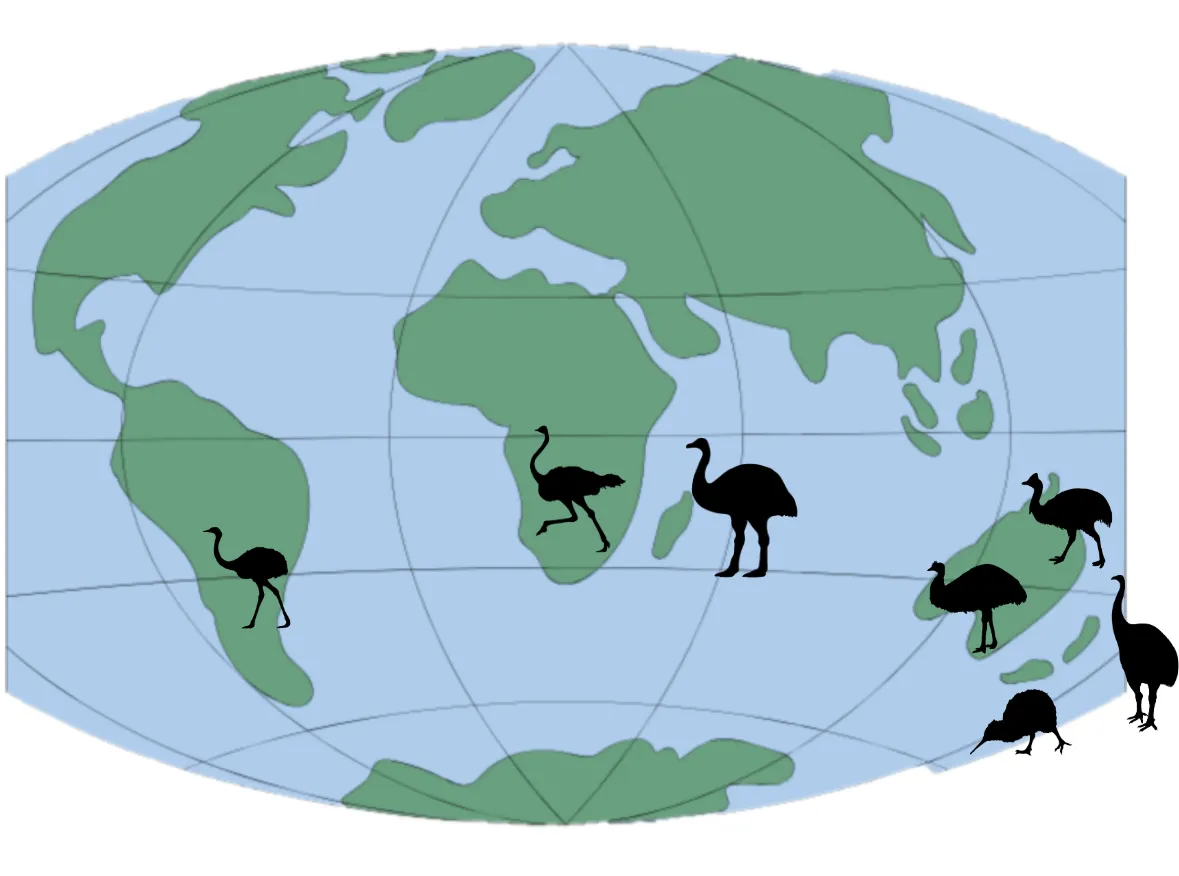 Figure 1. The distribution of the running birds or ratites.
The Palaeognathae clade consists mainly of these large running birds that are collectively called the ratites, named after their flat raft-like chest. But there is a last member of the Palaeognathae, namely the tinamou. On the American continent live multiple species of tinamous, and contrary to the ratites, they can fly.
If you take a look at the evolutionary tree of the Palaeognathae based on DNA data (figure 2), it is not difficult to find out why these animals are so controversial: their tree suggests that the tinamous evolved from the ratites, which would mean that they acquired flight.
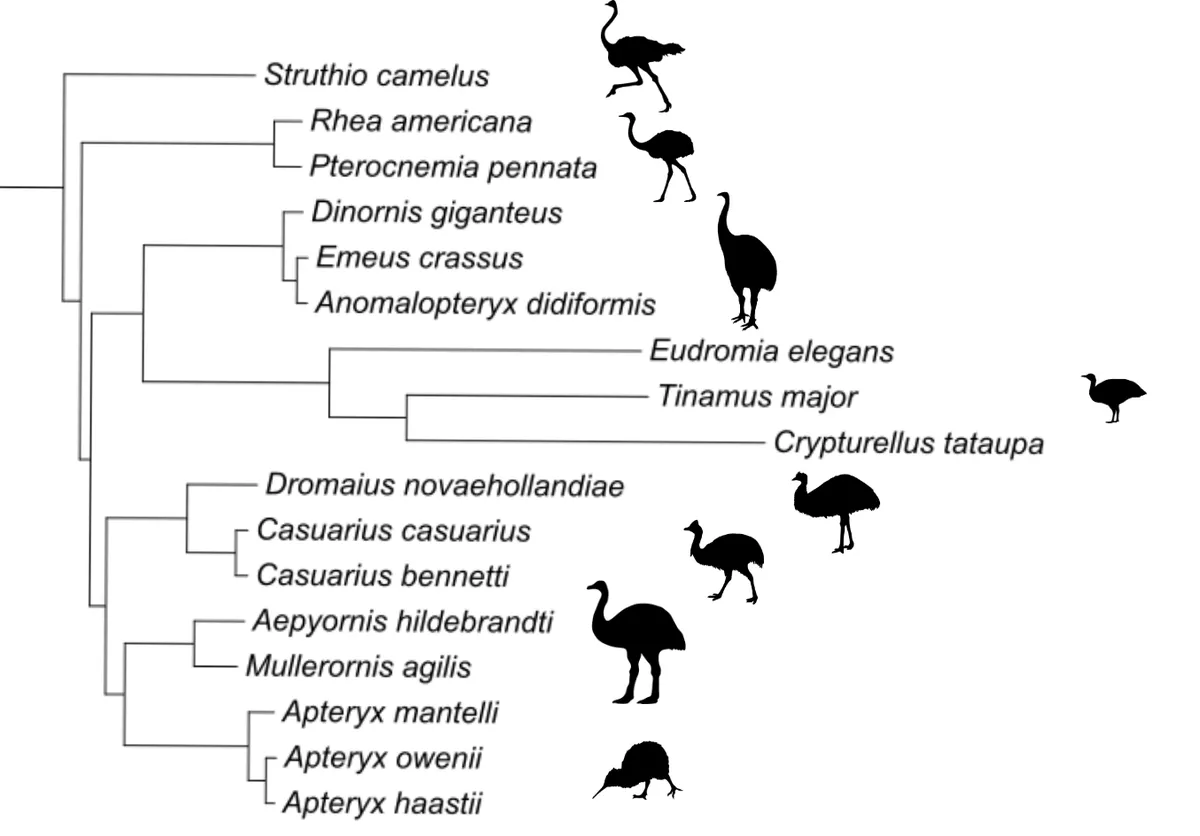 Figure 2. Evolutionary tree of the Palaeognathae based on DNA sequences from Mitchell et al. (2014). From top to bottom, you see the icons of the ostrich, the rhea, the moa, the tinamou, the emu, the cassowary, the elephant bird and the kiwi.
But an origin of flight is not a common step in evolution, and most paleontologists object to this idea. In this blog, you will find out everything about the evidence pro and contra such a view, and which consensus now seems established beyond the doubt of most authorities on bird evolution. However, while going through the evidence step by step, you might find yourself protesting against the current consensus; while going through all these steps, I will show how the evidence builds towards a much more logical hypothesis. This would have implications not only on the origin of the Palaeognathae, but on the origin of the birds in general, which might be completely different than what is currently believed.
Stay tuned!